
The lights flicker, then go dark. You hit the garage door button out of habit and—nothing. No hum from the opener, no click of the chain, just silence. Maybe you're trying to leave for work before a snowstorm really sets in, or you just got home and need to get the car inside before the roads ice over. Either way, you're standing in a cold garage wondering if that two-ton door is now permanently stuck.
It's not. Every garage door opener built in the last few decades has a manual release built in for exactly this situation. Here's how to use it safely, and what to do once the power comes back on.
Tools You'll Need
- A step stool, if your release cord hangs high or you're on the shorter side
- A flashlight or headlamp (outages often mean no overhead light either)
- Work gloves, especially if the door or track has frost or condensation on it
- Nothing else — this is a no-tools job by design
Opening the Door Manually
- Find the red emergency release cord. It hangs from a trolley on the track, usually a foot or two in front of the opener motor itself.
- Pull the cord straight down, then back toward the motor. This disengages the trolley from the chain or belt drive. You'll feel it release — a distinct mechanical pop.
- Lift the door slowly, using both hands, with your back straight. A standard double garage door can weigh well over 100 pounds once it's disconnected from the opener's spring-assisted system. If it feels dramatically heavier than normal or won't stay up on its own, stop. That's a sign of a spring problem, not a power problem, and lifting further risks the door slamming down.
- Prop the door open if you need it open for a while. A 2x4 or a sturdy object wedged under the track edge keeps it from drifting down while you load the car.
Closing the Door Manually
- Pull the door down firmly, using the inside handle if your door has one.
- Make sure it seats fully against the floor. In winter, a film of ice or packed snow on the slab can keep the bottom seal from sitting flush — clear the threshold first if you can.
- If you're leaving the house and the power is still out, consider locking the door manually with the slide lock or deadbolt mechanism on the inside, since the opener's lock function won't work without electricity.
Re-Engaging the Opener Once Power Returns
- Close the door fully by hand first. You want the door at the bottom of the track before you reconnect anything.
- Pull the release cord again — this time toward the door, not the motor — or simply run the opener from the wall button or remote. Most openers will automatically re-catch the trolley on the next cycle.
- Run the door through one full open-close cycle while you watch it. Listen for grinding, watch for the door traveling crookedly in the track, and confirm it reverses properly if something blocks the sensor beam.
- Test the safety sensors. Wave a hand or a piece of cardboard through the beam near the floor while the door is closing. It should stop and reverse immediately. If it doesn't, don't use the opener again until that's fixed — this is a safety system, not a convenience feature.
What You Can Handle, and What Needs a Technician
Pulling the release cord, lifting the door, and reconnecting the trolley are all things any homeowner can do safely. Where you should stop and call for help:
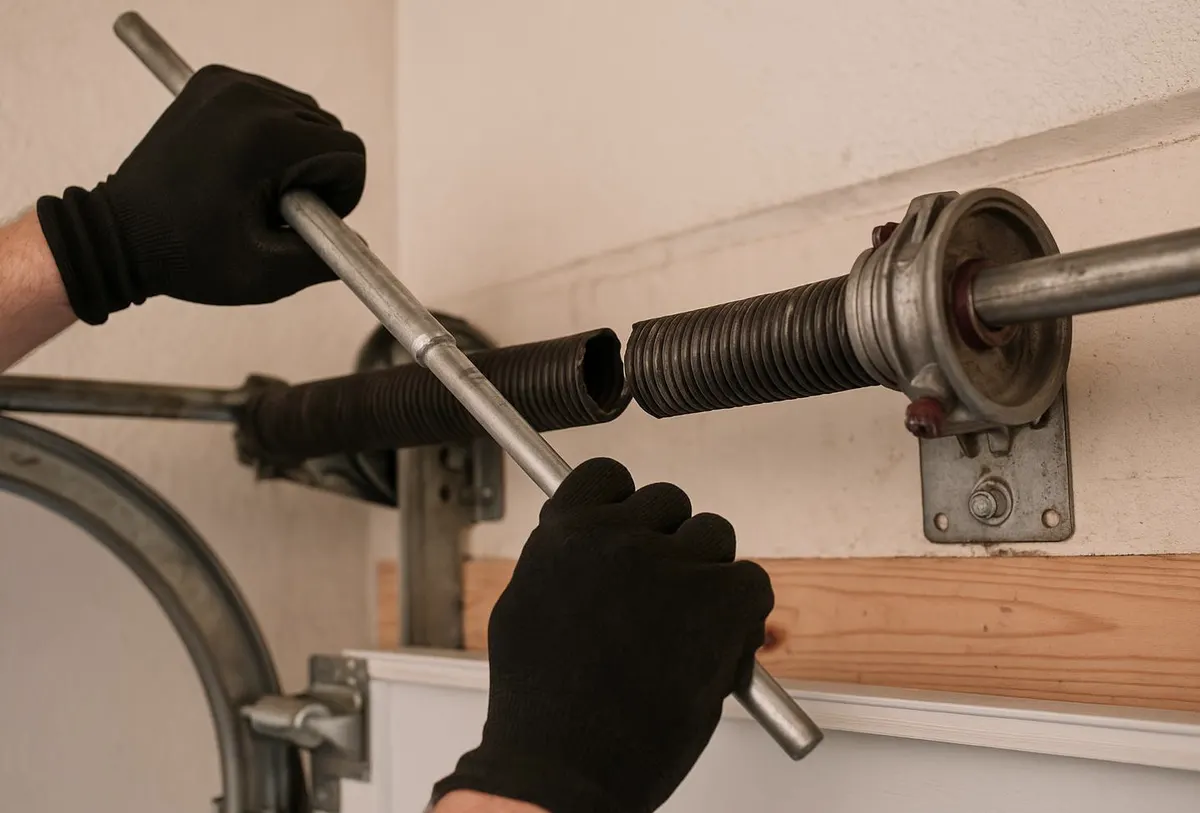
- The door felt unusually heavy, dropped suddenly, or wouldn't stay partway open — that points to a broken or weakening torsion spring, and those carry enough tension to cause serious injury if handled without the right tools.
- The door came off track, is bent, or is rubbing against one side of the opening. Michigan's freeze-thaw cycle shifts foundations and slabs over the years, and a door that's slightly out of alignment in October can bind completely once things cool down.
- The opener re-engages but the door reverses, stutters, or won't fully close. That's often a sensor, circuit board, or motor issue, not something to troubleshoot by trial and error.
- You hear grinding or popping from the spring assembly itself. Spring replacement is not a DIY repair — the tension involved can cause serious injury.
When to Call Lake Orion Garage Door
If your manual release worked fine but something felt off during reconnection — a door that's heavier than it should be, an opener that won't grab the trolley, or sensors that aren't responding — that's our territory. We handle garage door opener repair and installation and spring replacement for homes throughout Lake Orion, Oxford, Auburn Hills, Orion Township, Rochester Hills, Clarkston, Rochester, and Pontiac. With winter storms bringing both power outages and extreme cold that stresses springs and openers alike, it's worth having someone check the system before you're relying on it during the next outage.
If your garage door gave you trouble during an outage, or you just want it checked before the snow really flies, call Lake Orion Garage Door. We serve homes and businesses across Lake Orion, MI and the surrounding communities, and we'll get it running right.